
INTERCEPTION RESEARCH THEME
Our interception theme studies pre-cancer biology to help identify biomarkers of risk and uncover potential targets to intercept cancer at its earliest stages.
THEME OVERVIEW

There is a notable gap in our understanding of the mechanisms governing how pre-cancerous changes progress to cancer.
Recent advances in scientific methods and large-scale datasets have created new opportunities to study this important area of research.
This theme seeks to understand drivers of the transition from normal tissue to cancer, enabling early detection of pre-cancerous changes to inform precision interception and prevention.
RESEARCH AIMS AND EXPECTED OUTCOMES
Create shared models, datasets and computational tools that will benefit the International Alliance for Cancer Early Detection (ACED) member centres and the wider cancer research community.
Identify clinically useful biomarkers of cancer risk and progression to support earlier and more accurate cancer detection.
Characterise the pre-cancer microenvironment, investigating why some pre-cancers progress while others regress.
Define new targets for interception to validate preclinically for onward development with industry partners.
Accelerate progress in precision prevention, helping to reduce cancer incidence, mortality and morbidity, lowering the need for surgery, easing pressure on healthcare systems, and improving people's quality of life.
KEY CONTACTS

Rebecca Fitzgerald
University of Cambridge ACED Centre Director
Interception research theme Co-lead
Rebecca is Professor of Cancer Prevention and Director of the Early Cancer Institute at the University of Cambridge and an Honorary Consultant in Gastroenterology at Addenbrooke's Hospital, Cambridge. Her research focuses on improving methods for early detection of oesophageal cancer through better understanding of the molecular pathogenesis.
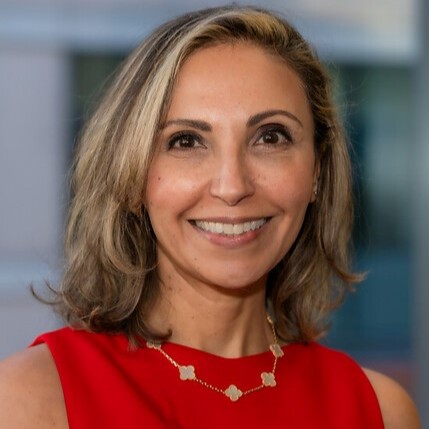
Irene Ghobrial
Dana-Farber Cancer Institute (DFCI) ACED Centre
Interception research theme Co-lead
Irene is Professor of Medicine at DFCI and Harvard Medical School and Director of the Center for Early Detection and Interception of Blood Cancers. Her main research interests include understanding the genetic, epigenetic, and immune drivers of multiple myeloma progression.

James Reading
University College London (UCL) ACED Centre
Interception research theme Co-lead
James is Associate Professor at the UCL Cancer Institute and a UK Research and Innovation Future Leaders Fellow. He leads the pre-cancer immunology lab at UCL and is particularly interested in mapping pre-invasive T-cell dynamics during carcinogenesis to detect and intercept cancer development.

Bridget Bannerman
University of Cambridge ACED Centre Programme Manager
Bridget oversees both the immunology and interception research themes and provides operational support for our ACED centre at the University of Cambridge.
OUR RESEARCH PRIORITIES
Our research focuses on defining the biological characteristics of pre‑cancer progression. This will improve how cancer risk is assessed and help identify early biomarkers and targets that could support future interception strategies.
Currently, we’re investigating obesity‑associated immune dysfunction across several cancer types. As obesity can alter immune responses, we’re investigating whether these changes influence the earliest stages of cancer initiation. By mapping how obesity impacts cellular and molecular processes as cancer develops, we will create a shared resource that researchers across the Alliance can use to drive new discoveries.
OUR APPROACH
How we deliver this research
Our work brings together data, samples and expertise from across the Alliance to investigate the biological mechanisms that underpin cancer initiation. Using multi‑omic, spatial and immune microenvironment data, we compare normal tissue, pre‑malignant lesions and early cancers. We also explore how the surrounding tissue and immune microenvironment influence whether pre‑cancerous lesions progress or remain stable. Together, these will help us identify both cancer‑specific and conserved targets for interception.
Large, diverse clinical cohorts form a core part of this work, helping us identify biomarkers linked to cancer risk and disease stage. We use computational and data‑driven methods to refine risk models and to understand when intervention is likely to be most effective for different cancer types.
We will assess and validate promising interception targets in new and improved preclinical models. This includes exploring ways to deliver these candidates directly to relevant tissues or pre‑cancerous lesions, aiming to maximise benefit and minimise off‑target effects.
Patient and public involvement and engagement (PPIE)
We embed PPIE throughout our research to ensure it reflects the needs and perspectives of people affected by cancer. Our PPIE champions actively help to guide the design and delivery of the interception theme.